The course is designed to teach the candidates how to safely install, maintain, and troubleshoot high voltage electrical systems. Face challenging projects with confidence and respond to emergencies with our high voltage training course. Enroll in HV training courses from MEP Dubai to take your career in the power industry to the next level.
4.7 Ratings
High Voltage Course Overview
The high-voltage course is a comprehensive program that covers all topics from fundamentals to advanced topics in high-voltage systems. It provides both theoretical and practical training in working with HV systems.
What will you learn?
The HV course starts with the fundamentals of high voltage power systems. The topics included in the course are
High-voltage components, generation, transmission, and distribution
Load flow analysis, fault analysis, and short-circuit analysis
Creation of substation design
Safety procedures to follow while handling high-voltage systems
Protection from lightning
Earthing protection
Practical applications
Software Tools Discussed in the Course
ETAP for calculating power flow
AutoCAD for creating drawings
SKM power tools
High Voltage Course Syllabus
The high voltage design course syllabus includes the following topics:
Know the fundamentals of high voltage systems, their importance, and applications.
Have an overview of HV equipment and its components, the classification of voltage levels, and types of high voltage systems.
Understand the basics of earthing and lightning protection. Learn about HV standards, codes, and regulations.
Become familiar with the basics of substations and their configuration and the safety codes and procedures.
Have an overview of the fundamentals of electrical power systems. Learn about power generation plants and their components
Understand generators, alternators, transmission lines, transformers, busbars, feeders, and power cables.
Become familiar with load demand, load management, voltage regulation, earthing, electrical safety, and protection equipment
Learn about power system protection, control, distribution substations, and likely faults in power generation and electrical power distribution systems.
Practical training in applications in modern electrical power networks.
Understand electric shock, electrocution, arc flash, arc blast hazards, step voltage, and touch voltage.
Learn about electrical flashover, insulation failure, induced voltage, backfeed hazards, overvoltage risks, surge hazards, and earthing risks
Study HV cables and overhead line hazards. Know transformer and switchgear hazards.
Know the risks associated with high-voltage equipment failure. Have an overview of electrical burns and injuries
Find out how to assess risks, identify hazards, and prevent them.
Become familiar with the different types of PPE used for high-voltage shock
Learn in detail about insulated electrical gloves, safety helmets, safety goggles, shock-proof footwear, insulating mats, and protective eyewear.
Find out how to select the appropriate PPE depending on the risk level. Find out how to inspect and test PPE.
Know the PPE requirements for maintenance and arc flash. Study how to use, care for, and maintain PPE.
Practical training in the use and maintenance of PPE.
Learn about system voltage, frequency, equipment ratings, and specification
Find out how to select transformers, circuit breakers, isolators, disconnectors, high voltage switchgear, busbars, HV cables, and insulators
Understand how to select current transformers, surge arresters, voltage transformers, and earthing equipment.
Study in detail protection requirements, maintenance considerations, clearance requirements, cost considerations, and lifespan assessment for selection of the right equipment
Practical training in equipment selection and application of industry standards
Understand what LOTO is and its purpose in HV systems. Find out how to apply locks and tags and how to remove them.
Become familiar with procedures for equipment isolation, shutdown, deenergisation, reenergisation, restoration, and group lockout.
Find out how to do earthing and grounding after isolation and how to discharge stored and residual energy
Learn about special LOTO situations and emergency cases. Have an overview of the common LOTO mistakes and how to avoid them.
Understand isolation points, PTW integration, LOTO checklists, and workplace procedures
Know the types of maintenance, including preventive, predictive, and corrective.
Find out how to maintain transformer, switchgear, circuit breaker, HV cables, insulator, and busbar.s
Understand the maintenance procedures for PPE, surge arresters, earthing systems, grounding systems, and HV equipment
Learn about thermographic inspection, electrical diagnostic procedures, high voltage testing procedures, electrical troubleshooting, and equipment inspection procedures
Study how to document and report maintenance.
Study the types of switching equipment and have an overview of safe switching. Learn about switching of transformers, busbars, and feeders
Have an overview of switchgear, switching arrangements, switching plans, and the sequence of operations involved
Understand in detail the procedures for isolation, deenergization, PTW, transfer, changeover, restoration, and reenergisation.
Become familiar with pre-switching checks and safe approach distances. Learn about switching in normal conditions and emergency conditions.
Know how to communicate and authorise during switching.
The Importance of High Voltage Course Training Certification
The Quantity Surveying certification is important for professionals in the construction industry as it helps in moving their careers to the next level by opening doors to multiple job opportunities.
Why learn the HV certification course?
You should attend HV classes to:
Gain knowledge in HV systems, components, and equipment
Understand HV hazards, safety procedures, switching procedures, maintenance techniques, and system operations
Enhance your profile and improve career opportunities
Prepare for HV roles
Increase confidence to work safely with HV systems
Industry Demand for Skilled HV Engineer Professionals in Dubai
The fast-growing construction and infrastructure industry has created a huge demand for HV engineers who have completed a high voltage training course.
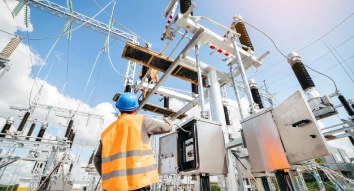
They are in demand in substations for testing and maintenance.
Employers hire professionals who have high voltage certification because of their skills in handling HV systems
Professionals with expertise in high voltage power systems are needed in complex projects.
High Voltage Design Training Outcome
After completing the high voltage design course, you will get an HV certification, which
Proves the skills gained in HV systems and safety awareness
Enhances your profile and will increase your chances of getting employed in the electrical power industry
Has global recognition and is valid for getting jobs in Dubai and abroad
Supports your career opportunities
Why Choose MEP Dubai for HV Classes in Dubai?
MEP Dubai is popular for its short-term technical courses designed for professionals who want to upgrade and freshers who want to gain practical skills. You should join it for its high voltage classes because of:
Comprehensive syllabus including all concepts
Experienced trainers with updated knowledge
Flexible schedules to suit working professionals
Career support and placement guidance
Industry-recognized certificate
FAQs
High-voltage training is a short-term program that equips professionals with the skills and confidence to work with HV systems safely.
Yes, certificates prove the skills acquired and special knowledge acquired. It increases employment opportunities and strengthens the candidate’s profile.
The duration depends upon the syllabus, the institute, and the level of the course. However, it may last from a few days to a few weeks.
HV certified professionals are hired by the power industry, construction companies, manufacturing industries, the oil & gas sector, infrastructure projects, and the energy sector.
Yes, practical training is provided for safety procedures, PPE, switching procedures, software tools, and troubleshooting.
The safety procedures covered include PPE, hazard detection, grounding, earthing, LOTO, PTW procedures, and emergency procedures.
Yes, it is suitable for maintenance engineers because they can upgrade their knowledge in troubleshooting and preventive maintenance of HV systems.
Having More Questions?
If you have any unanswered questions you can contact the
support team 24/7.
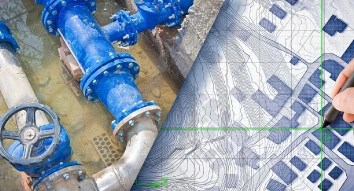
This course is one of the MEP Certification Courses and gives thorough
training in the design of water supply, distribution, and drainage systems. It
equips you with the skills to build cost-effective and water-saving plumbing
designs.
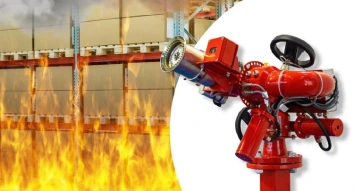
The firefighting design course covers practical and theoretical aspects
of the design of
fire protection system. It is perfect for MEP engineers interested in designing
safe,
efficient, and effective firefighting systems.
This course from MEP Training Institute Dubai provides comprehensive
knowledge of
residential, industrial, and commercial heating, ventilation, and air conditioning
systems. It offers practical training in load calculations, the selection of
chillers
and AHUs, and the use of software tools for HVAC design.

 Plumbing Design Course